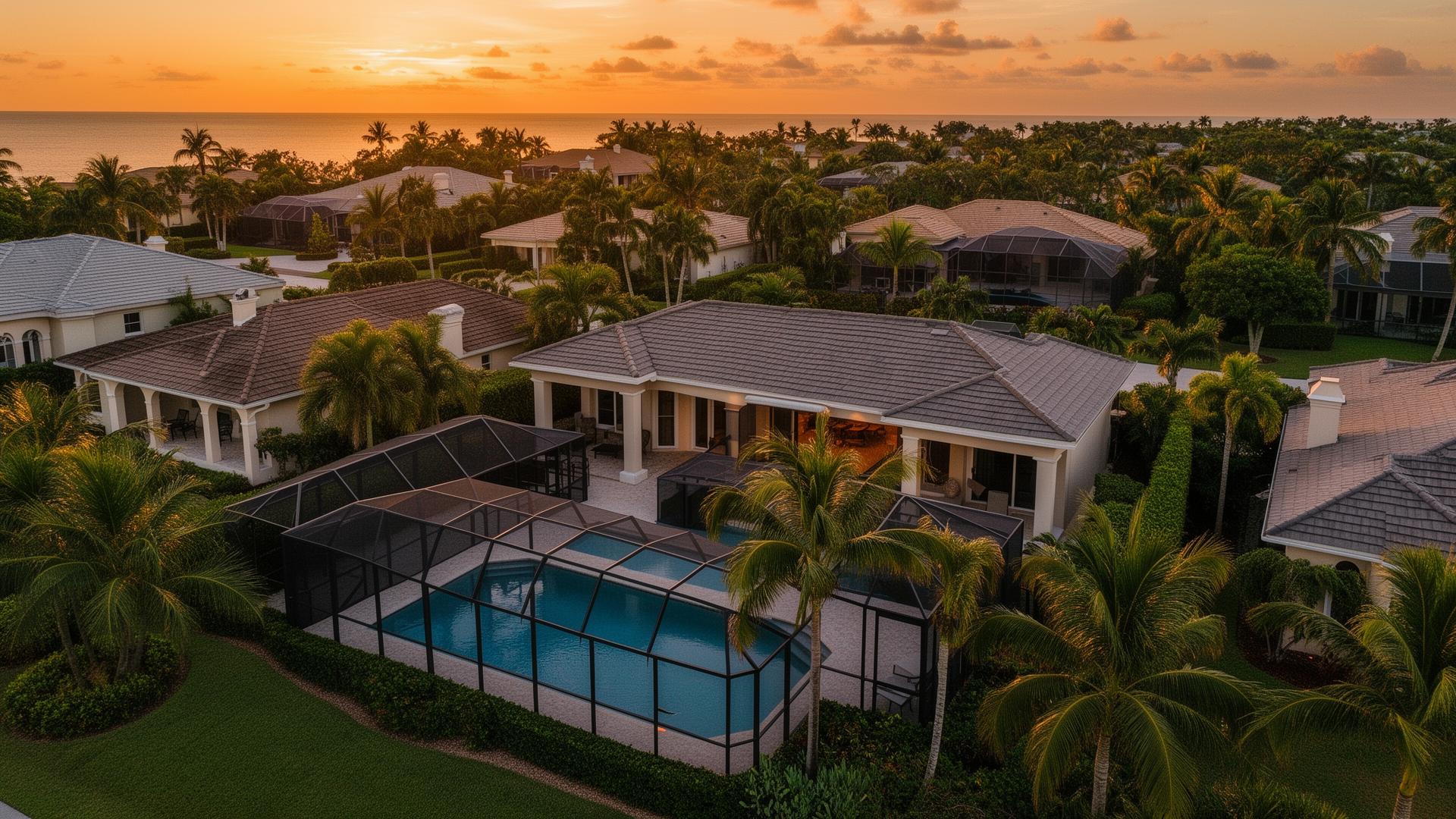
Explore West Coast Screening and Seamless Gutters LLC
West Coast Screening and Seamless Gutters LLC provides professional pool cage installation, screen enclosure repair, lanai rescreening, seamless gutter services, and outdoor living solutions for homeowners across Southwest Florida.
Use this page to browse our main website sections, learn more about our services, review our materials, understand our process, and find location-specific pages for the communities we serve.
Main Website Pages
Find important company information, contact details, customer reviews, and helpful resources.
- Home — Learn about West Coast Screening and Seamless Gutters LLC and our core services.
- Contact — Request an estimate, schedule service, or ask a question about your project.
- Reviews — Read customer feedback from homeowners who have worked with our team.
- Why Us — See why Southwest Florida homeowners choose us for pool cages, screening, and gutters.
- About — Company background, licensing and Southwest Florida coverage.
- Our Process — Consultation, design, permitting, construction and final inspection.
- Glossary — Plain-English definitions of pool cage and screen enclosure terms.
- Learn — Cost guides, comparisons and homeowner how-tos.
- Videos — Pool cage construction footage and the luxury pool cage enclosures video and design guide; also pool cage construction video and homeowner planning guide covering permits, screening, installation, drainage and care.
- Materials — Learn about the screen, aluminum, fasteners, gutters, and products used in our projects.
- Privacy Policy — Review how customer information is handled.
- Terms and Conditions — Read website and service-related terms.
- Sitemap — View a complete index of website pages.
Pool Cage and Screen Enclosure Services
Explore our pool cage, lanai, and screen enclosure services for Florida homes.
- Pool cage installation
- Pool cage repair
- Pool cage rescreening
- Lanai rescreening
- Screen enclosure repair
- Screen room installation
- Patio screen enclosures
- Screened front entry installation
- Hurricane screens
- Driveway pavers and hardscape
- Screen rooms and lanai FAQ
- Structural upgrades and garage screen doors
- Door kits and screen door repairs
- Screen panel replacement
- Roof screen replacement
- Super gutter service
- Hurricane preparation for pool cages
Our pool cage and screen enclosure services are designed for Florida’s sun, humidity, heavy rain, salt air, insects, and storm season.
Seamless Gutter Services
Browse information about our seamless gutter installation and gutter-related services.
- Seamless gutter installation
- Gutter replacement
- Gutter repair
- Super gutter installation
- Downspout installation
- Gutter cleaning
- Gutter protection options
- Stormwater drainage support
Proper gutter systems help move water away from your home, patio, roofline, fascia, pool cage, and foundation.
Paver and Hardscape Services
Detailed guides for each paver and hardscape service offered by our paver division across Southwest Florida.
- Driveway pavers overview
- Driveway paver installation
- Pool deck pavers
- Pool cage pavers
- Patio pavers
- Paver walkways
- Outdoor kitchens
- Paver fire pits
- Retaining walls
- Commercial paver installation
- Paver repair and restoration
- Paver sealing
- Travertine installation
- Brick pavers
- Modern hardscape design
- Luxury outdoor living
- Paver cleaning and sealing
Each paver topic page covers planning, materials, base preparation and design considerations for that type of project.
Helpful Homeowner Resources
Our website includes educational content to help homeowners protect their outdoor living areas and make better project decisions.
- Pool Cage Screen Material Comparison for Florida Homes
- Gutter Overflow Diagnosis for Florida Homes
- Pool Cage Estimate Checklist for Florida Homeowners
- Pool Cage Post-Storm Inspection and Repair Checklist
- Lanai Roof Comparison: Insulated Panels, Pan Roof or Screen Roof
- Pool Cage Screen Door Repair Guide for Florida Homes
- Learn — articles, cost guides and how-tos
- The Florida Pool Cage Guide
- Pool enclosure cost in Florida
- Why Florida pools have cages
- Pool cage repair vs. replace
- Pool cage repair vs. rescreening vs. replacement
- Pool cage rescreening cost
- No-see-um screen: when you need 20×20 mesh
- Polyester vs. fiberglass pool screen
- Pool cage styles: mansard, gable, dome, picture window
- Picture window pool cage cost and design
- Pool cage wind ratings and Florida Building Code
- Southwest Florida pool cage permit guide
- Screen enclosure engineering plans explained
- Pool cage fastener replacement in Florida
- 12-month pool cage maintenance plan
- Pool cage preparation for hurricane season
- Super gutters explained
- Super gutter repair vs. replacement
- 5-inch vs. 6-inch gutters for Florida rain
- Paver driveway base depth in Florida
- Public adjusters in Florida: fees, rights and when to hire one
- Florida wind zones and building code explained
- Pool cage host structure attachment
- Site plan and Notice of Commencement for Florida pool enclosures
- Standard details vs. site-specific engineering
- Sarasota pool enclosure engineering and permitting guide
- Charlotte County pool enclosure engineering and permitting guide
- Pool enclosure engineering glossary
- Florida Notice of Commencement guide — NOC customer protection and county forms for all 67 Florida counties.
These resources are created for Florida homeowners who want to maintain their pool cage, lanai, gutters, and outdoor space year-round.
Pool Cage & Screen Enclosure Glossary
Our glossary explains the technical terms you will hear when planning, repairing, or upgrading a pool cage, lanai, or screen enclosure in Florida. Each entry is written in plain English and covers what the term means, why it matters, and how it can affect your project.
- Design Pressure — Design pressure is the pressure a structural design assigns to a particular surface, component or assembly. It is commonly expressed in pounds per square foot, rather than miles per hour, and may act toward or away from the surface.
- Wind Exposure Category — Wind exposure category describes the surrounding terrain considered in a structural wind analysis. It addresses how upwind surface conditions affect the wind reaching a structure; it is different from mapped design wind speed or a storm evacuation zone.
- Continuous Load Path — A continuous load path is the connected route by which forces pass through structural components and connections into the supporting construction and ground. It includes the joints between members, not just the large visible beams.
- Florida Product Approval — Florida Product Approval is a state system for documenting approval of qualifying building products and systems within its scope. An approval record identifies a product and supporting limitations; it is not blanket approval of every project using that brand.
- Galvanic Corrosion — Galvanic corrosion is a corrosion mechanism involving electrically connected dissimilar metals in a conductive environment. Their coupling can change corrosion rates, with the more anodic material becoming more vulnerable under the actual exposure conditions.
- Roof Flashing — Roof flashing is a water-shedding material used at vulnerable roof transitions, edges and penetrations. It works with adjacent roof and wall layers to direct water outward, rather than relying on insect screening to keep a joint dry.
- Drip Edge — Drip edge is roof-edge flashing that helps guide water away from the roof edge and underlying fascia area. Its relationship to the roofing, underlayment and gutter depends on the roof assembly and applicable details.
- Screen Mesh Count and Openness — Mesh count describes the weave count in each direction. Openness describes the proportion of open area in the fabric. These are related properties, but the yarn or wire thickness also affects how much open space remains.
- Privacy Screen — Privacy screen is a broad description for screening or infill chosen to reduce visibility through an opening. The effect depends on the material, lighting, viewing angle and installation; the name alone does not identify a specific product.
- Aluminum Extrusion — An aluminum extrusion is a shaped product made by forcing aluminum through a die. In enclosures, extruded profiles can form posts, beams, channels and other components, with geometry chosen for the intended function.
- Aluminum Alloy and Temper — An aluminum alloy designation identifies a material composition family. A temper designation describes its processing condition. Together they provide information different from the member's shape, outside dimensions or coating color.
- Screen Enclosure Bracing — Screen-enclosure bracing is the arrangement of members, cables and connections used to help control structural movement and transfer forces. Its form and location depend on the engineered enclosure, rather than a universal diagonal detail.
- Pool Cage Base Plate — A pool-cage base plate is a plate or base component at a post support that helps transfer reactions between the post and its anchorage. The actual assembly depends on the enclosure detail and supporting construction.
- Anchor Embedment Depth — Anchor embedment depth describes how far an anchor engages its supporting material under the relevant product or design definition. It is different from overall fastener length and may differ from a drilled hole's total depth.
- Anchor Edge Distance — Anchor edge distance is the distance from an anchor location to the relevant edge of the supporting material, measured as specified by the governing documentation. It is separate from the spacing between neighboring anchors.
- Roof Drainage Area — Roof drainage area is the roof area contributing runoff to a particular gutter, outlet or drainage component. It is used to understand inflow distribution and is different from the total square footage of the home.
- Rainfall Intensity — Rainfall intensity describes how much rain falls over a stated time, often expressed as a depth per hour. A drainage design uses a defined rainfall criterion; annual rainfall totals describe a different measure.
- Permeable Interlocking Concrete Pavement — Permeable interlocking concrete pavement is a designed pavement system that allows water through its joints or openings into underlying aggregate layers. Its performance depends on the whole assembly, not simply on choosing units called pavers.
- Geotextile — A geotextile is a permeable textile used in a designed soil or pavement assembly for functions such as separation and filtration. It is different from an impermeable liner and from a grid selected primarily for reinforcement.
- Paver Subgrade — Paver subgrade is the soil surface supporting the pavement's base or subbase layers. It may be native ground or prepared fill, and its condition is different from the bedding sand directly beneath the paving units.
- Pool Cage Rafter — A pool-cage rafter is a primary sloping roof-framing member in an enclosure roof arrangement. Its actual section, support points and connections come from the design; the name does not establish a universal member size.
- Ridge Member and Ridge Beam — A ridge is the high line where opposing roof slopes meet. A ridge member or ridge beam is a component at that location, but its presence and structural role depend on the actual roof system.
- Eave Beam — An eave beam is a beam or perimeter member along the lower edge of a roof in the arrangement described by the project. It can receive roof-framing reactions and connect to posts or other supports.
- Screen Door Header — A screen-door header is the fixed horizontal member spanning the top of a door opening. It belongs to the surrounding opening rather than to the moving door leaf, and its role depends on the frame arrangement.
- Screen Door Threshold — A screen-door threshold is the fixed lower transition at a doorway. Its form may be a sill, track or other assembly-specific detail that relates the door opening to the adjacent walking surface.
- Screen Retaining Channel — A screen-retaining channel is a component that receives and holds screen fabric through its specified retention system. It may be a separate channel attached to an opening, rather than a groove integral to a larger structural extrusion.
- Structural Span — Structural span is the distance a member bridges between supports under the definition used in the design. It is different from a product's overall length and may differ from the clear opening visible beneath it.
- Structural Deflection — Structural deflection is movement or change in shape under load. It is distinct from a material's ultimate strength and from permanent distortion that remains after the load is removed.
- Tributary Area — Tributary area is the portion of a loaded surface assigned to a supporting member or connection under a structural model. It helps explain how distributed surface loading becomes forces in the framing.
- Concrete Anchor — A concrete anchor is a fastener or anchoring assembly designed to transfer forces from an attached component into concrete. Screw, expansion and adhesive systems use different mechanisms and have product-specific requirements.
- Cracked Concrete in Anchor Design — Cracked concrete, in anchor design, refers to a substrate condition addressed by the applicable anchoring method and product qualification. It is not simply a visual label assigned because a homeowner can or cannot see a crack.
- Concrete Breakout — Concrete breakout is an anchorage-related failure mode in which a portion of concrete separates as forces are transferred through an anchor or anchor group. It is different from breaking the anchor steel or an anchor pulling out by another mechanism.
- Pool Safety Barrier — A pool safety barrier is an arrangement intended to restrict unsupervised access to a swimming pool. Its requirements and configuration differ from the general purpose of insect screening around an outdoor area.
- Permit Exemption — A permit exemption is a defined circumstance in which an authority does not require a building permit for specified work. It does not mean that every other applicable construction, zoning, safety or contractual requirement disappears.
- Signed and Sealed Plans — Signed and sealed plans are professional design documents bearing the responsible licensed professional's authentication in the required form. Their identity, scope and revision matter; a seal is not a general warranty for unrelated work.
- Pitting Corrosion — Pitting corrosion is localized corrosion that forms cavities in a metal surface. It differs from uniform surface loss and from a deposit that merely changes appearance, though several conditions may occur together.
- Crevice Corrosion — Crevice corrosion is localized corrosion associated with a sheltered region where the chemical environment differs from the surrounding exposed surface. Tight joints, deposits and contact interfaces can create relevant conditions.
- Filiform Corrosion — Filiform corrosion is a localized under-coating corrosion form that can produce fine, thread-like trails. It is associated with conditions beneath a protective film and should be distinguished from a general claim that all peeling paint has the same cause.
- Fascia Board — A fascia board is a roof-edge board or member along the eave, commonly near rafter ends and gutter attachment. It is different from a thin fascia cover, a soffit panel and the insect-screen infill near an enclosure roofline.
- Soffit — Soffit is the finished underside of a roof overhang or similar projecting area. Roof soffits may include ventilation provisions, but their actual construction and role depend on the building assembly.
- Kick-Out Flashing — Kick-out flashing is a diverter at the lower end of certain roof-to-wall intersections. It directs water away from the wall and toward the intended drainage route, rather than allowing the flow to continue behind the wall finish.
- Roof Valley — A roof valley is the inward intersection where two sloping roof planes meet. It forms a route that can collect runoff from adjoining surfaces and deliver a concentrated flow toward the lower roof or drainage system.
- Roof Pitch — Roof pitch describes roof slope, commonly using rise relative to horizontal run under a stated convention. It differs from the gradual elevation change along a gutter, even though both concern geometry and water movement.
- Conductor Head — A conductor head is a collector or transition box that receives roof water and delivers it to a leader or downspout. Its configuration differs from a simple hole and fitting in the bottom of a residential gutter.
- Roof Runoff — Roof runoff is water that leaves a roof surface after rainfall or another source of wetting. Gutters, outlets, downspouts and receiving areas influence its route, but they should be considered as a connected water-management system.
- Drainage Swale — A drainage swale is a shaped surface depression or channel intended to convey or manage water across a site. It may be vegetated or otherwise constructed according to its design, and is different from a buried drainage pipe.
- Screen Aperture — Screen aperture is the opening between adjacent strands of a woven screen. It describes the gap itself, while mesh count describes the weave count and openness describes the proportion of the fabric occupied by openings.
- Screen Yarn Diameter — Screen yarn diameter is the thickness of the coated yarn or wire used to form a screen fabric, under the manufacturer's measurement convention. It is a separate characteristic from the number of strands in the weave.
- Paver Interlock — Paver interlock describes resistance to relative movement within an interlocking pavement system. It depends on the paving units and their arrangement together with joints, support and perimeter restraint; it is more than the visual pattern.
- Paver Joint Width — Paver joint width is the intended gap between adjacent paving units under the selected pavement system. It is different from the visible width created by beveled top edges and should match the units and joint material.
- Paver Chamfer — A paver chamfer is an intentionally beveled edge, commonly at the top perimeter of a paving unit. It is a manufactured shape feature, different from a chipped or spalled edge and from the joint between units.
- Paver Soldier Course — A soldier course is a border arrangement in which rectangular units generally have their long axes perpendicular to the line of the border. It describes layout, not the structural capacity of the pavement edge.
- Paver Sailor Course — A sailor course is a border arrangement in which rectangular units generally run lengthwise along the border, with their long axes parallel to its direction. It is distinct from a soldier course whose units turn across the edge.
- Geogrid — A geogrid is a geosynthetic grid selected for reinforcement or stabilization within a designed soil or aggregate assembly. Its open structure and intended interaction with surrounding material differ from a textile used primarily for separation or filtration.
- Open-Graded Aggregate — Open-graded aggregate is aggregate with a size distribution that leaves relatively open voids between particles compared with a densely packed mix containing more intermediate sizes and fines. It can serve particular drainage and storage functions in designed assemblies.
- Paver Underdrain — A paver underdrain is a subsurface drain used within a designed pavement assembly to collect and convey water from below the surface. In permeable systems it may provide an outflow route from aggregate storage layers.
- Paver Rutting — Paver rutting is a pattern of surface depression associated with repeated wheel paths. It differs from an isolated settled patch, though both can involve the supporting pavement system and require investigation.
- Paver Creep — Paver creep describes gradual lateral movement or migration of paving units within a pavement. It can appear as changing alignment, widening joints or displacement near a boundary, rather than only vertical settlement.
- Insulated Roof Panel Core — An insulated roof-panel core is the internal material between the panel's outer skins in a sandwich construction. Its type and properties belong to the exact product specification; core thickness alone does not identify the entire roof assembly.
- Roof Panel Interlock — A roof-panel interlock is the shaped edge arrangement through which compatible roof panels engage each other. Its geometry, fastening and sealing requirements are specific to the product and should not be inferred from a generic roof illustration.
- Screen Tension
- Screen Panel Replacement
- Screen Door Closer
- Gutter Guards
- Gutter Hanger
- Gutter Outlet
- Gutter End Cap
- Gutter Overflow
- Paver Bedding Sand
- Paver Settlement
- Paver Efflorescence
- Paver Sealer
- Screen Cleaning
- Screen Mesh Inspection
- Screen Spline Groove
- Screen Edge Pullout
- Screen Tear
- Screen Door Latch
- Screen Door Hinge
- Screen Door Sweep
- Lanai Screen Bay
- Lanai Screen Infill
- Half-Round Gutter
- Gutter Miter
- Gutter Sealant
- Gutter Leak
- Gutter Sagging
- Gutter Clog
- Gutter Standing Water
- Downspout Elbow
- Downspout Extension
- Splash Block
- Downspout Discharge
- Paver Joint Sand
- Paver Joint Sand Loss
- Paver Lippage
- Paver Heaving
- Paver Washout
- Paver Herringbone Pattern
- Paver Cut Edge
- Paver Compaction
- Paver Pressure Washing
- Paver Joint Weeds
- Paver Spalling
- Pool cage & screen enclosure glossary index
- Super gutter
- Chair rail
- Kickplate
- Mansard roof style
- Gable roof style
- Dome / hip roof style
- Picture-window panel
- Spline
- Fascia screen
- Anchor schedule
- No-see-um screen
- Polyester and pet-resistant screen
- 18×14 pool screen
- SunScreen solar mesh
- K-style gutter
- 5-Inch vs. 6-Inch K-Style Gutters — Compare nominal gutter sizes using roof area, rainfall, gutter-run length, outlets, downspouts, appearance and installation priorities.
- Design wind speed
- Wind zone
- Hurricane rating category
- Notice of Commencement (NOC)
- Cage fastener
- 304 stainless fasteners
- 316 stainless fasteners
- Galling and thread seizure
- Tensile strength
- Wind uplift
- Combined tension and shear
- Notice of Commencement Termination Form
- Unpaid Construction Liens in Florida
- Tek screw
- Purlin
- Super beam
- Upright post
- Door jamb
- Weep hole
- Pan roof
- Elite insulated roof panel
- Downspout
- Road base
- Pool cage footer
- Riser wall
- Paver edge restraint
- Polymeric sand
- Gutter pitch
The glossary is a useful companion to our service and learn pages. If you come across a term you do not recognize while reading about pool cages, rescreening, or seamless gutters, start with the glossary for a quick, expert explanation.
Screen Materials We Install
Compare the Phifer® screen fabrics we install on pool cages, lanais and screen rooms across Southwest Florida.
- Screen materials overview
- BetterVue® screening
- UltraVue®2 clear insect screening
- TuffScreen® heavy-duty mesh
- TuffScreen® no-see-um
- SunTex® 80/90 solar screen
- Pool & patio screen (18×14)
- 20×20 no-see-um screen
- Glas-Shield® privacy screen
- PetScreen® pet-resistant screen
Each material page explains visibility, strength, insect protection and sun control so you can match the mesh to how you use your enclosure.
Recent Local Updates
Current project notes, permitting news and storm-preparedness updates for the communities we serve.
- North Port, FL updates
- Venice, FL updates
- Sarasota, FL updates
- Port Charlotte, FL updates
- Punta Gorda, FL updates
- Englewood, FL updates
- Rotonda West, FL updates
- Palmetto, FL updates
- Bradenton, FL updates
- Lakewood Ranch, FL updates
- Cape Coral, FL updates
- Fort Myers, FL updates
- Naples, FL updates
City update pages are refreshed as new pool cage, lanai screening and seamless gutter work is completed in each area.
Communities We Serve
West Coast Screening and Seamless Gutters LLC serves homeowners throughout Southwest Florida, including coastal, inland, waterfront, golf-course, and growing residential communities.
Explore our city pages for local pool cage, lanai screening, rescreening, and seamless gutter services.
- Sarasota
- Venice
- Port Charlotte
- Rotonda West
- Palmetto
- Cape Coral
- North Port
- Englewood
- Punta Gorda
- Bradenton
- Lakewood Ranch
- Fort Myers
- Naples
- Nearby Southwest Florida communities
Each city page is written to help homeowners find local service information for pool cages, screen enclosures, lanais, and gutter installations in their area.
Find the Right Page for Your Project
Whether you are planning a new pool enclosure, replacing old screens, repairing storm damage, upgrading hardware, installing seamless gutters, or preparing your pool cage for hurricane season, this sitemap can help you quickly find the right page.
If you are not sure where to start, visit our contact page and send us a message. Our team can help you choose the right service for your home, schedule an estimate, and answer questions about materials, repairs, installation, and maintenance.
Serving Southwest Florida Homeowners
From pool cage construction to lanai rescreening and seamless gutters, West Coast Screening and Seamless Gutters LLC is committed to helping homeowners protect and improve their outdoor living spaces.
Use the links on this sitemap to explore our services, learn about our process, view customer reviews, and find helpful resources for maintaining your pool cage, screen enclosure, lanai, and gutter system in Florida’s coastal climate.