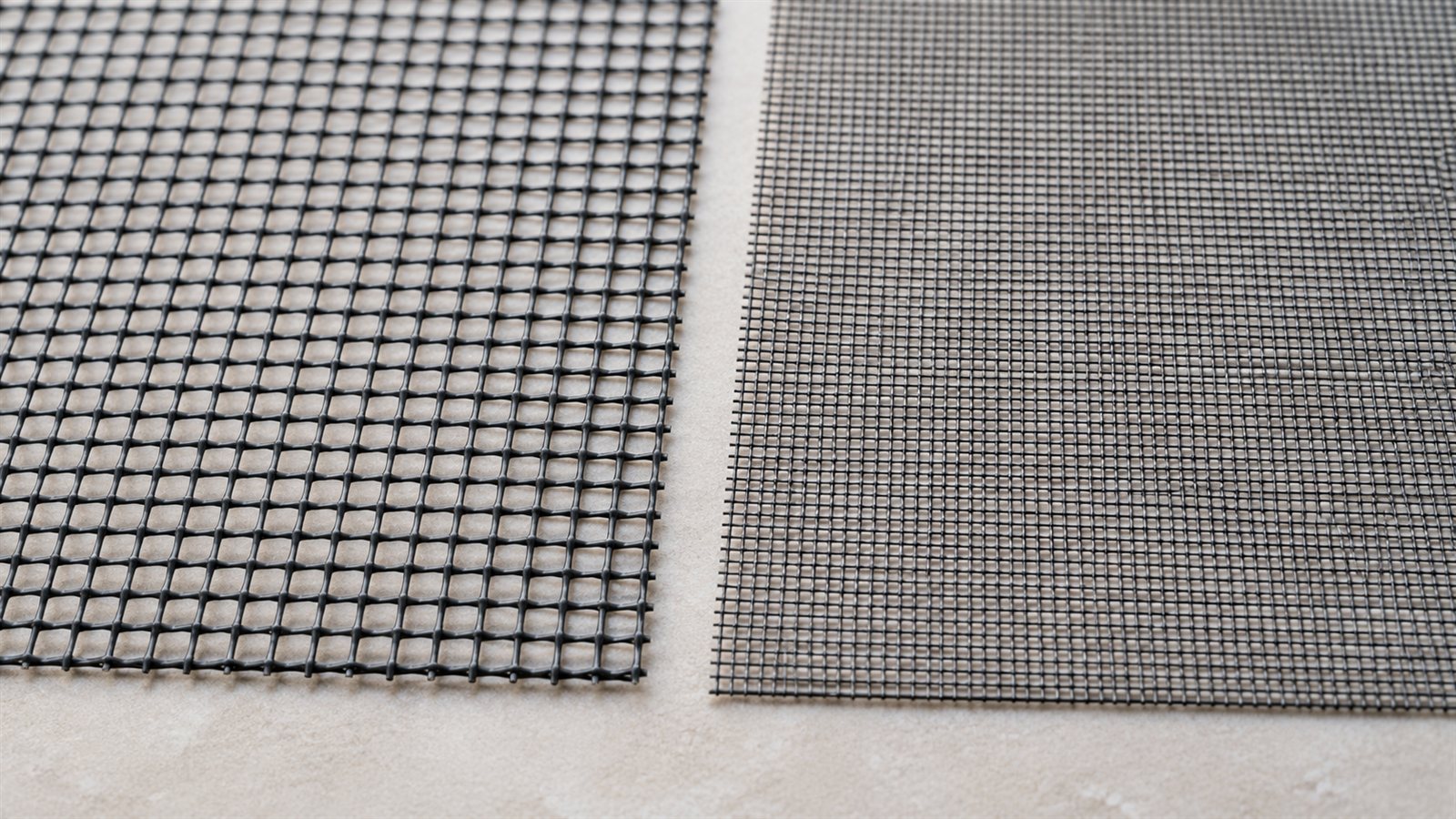
Count alone does not describe the fabric
Two products with similar weave counts can use different strand sizes or coatings. Their opening dimensions and open-area percentages can therefore differ. Phifer's terminology guide treats count, openness, aperture and diameter as distinct characteristics. A quote should name the actual product instead of using only a familiar number such as 18×14.

Compare products by the property you need
For a clearer view, smaller-insect screening or sun control, ask which published characteristic supports the intended benefit. A higher openness percentage is not a standalone strength or wind rating. Review the material with its application and retaining-system requirements. This combined explanation helps compare geometry; the individual material pages remain the place for specific product choices.
A practical homeowner example
A homeowner compares samples labeled with similar counts but notices different views through them. Looking up strand size and openness provides a better discussion than assuming the count fully specifies the fabric.
This is an illustrative planning scenario, not a report of a particular West Coast Screening project.
Questions to bring to an estimate
- Name the actual fabric and intended wall, door or roof application.
- Check compatibility with the frame and retaining system.
- Compare material claims using the same property, units and conditions.
Frequently asked question
Is mesh count the same as opening size?
No. Opening size also depends on strand dimensions and construction. Count is one part of the fabric description, not a complete aperture specification.
Related glossary terms
For the broader vocabulary, return to the pool cage and screen-enclosure glossary.
Authority sources and further reading
Use these sources within their scope. Manufacturer information applies to the identified product; research and general guidance do not establish a rating or an approved repair for an individual project.