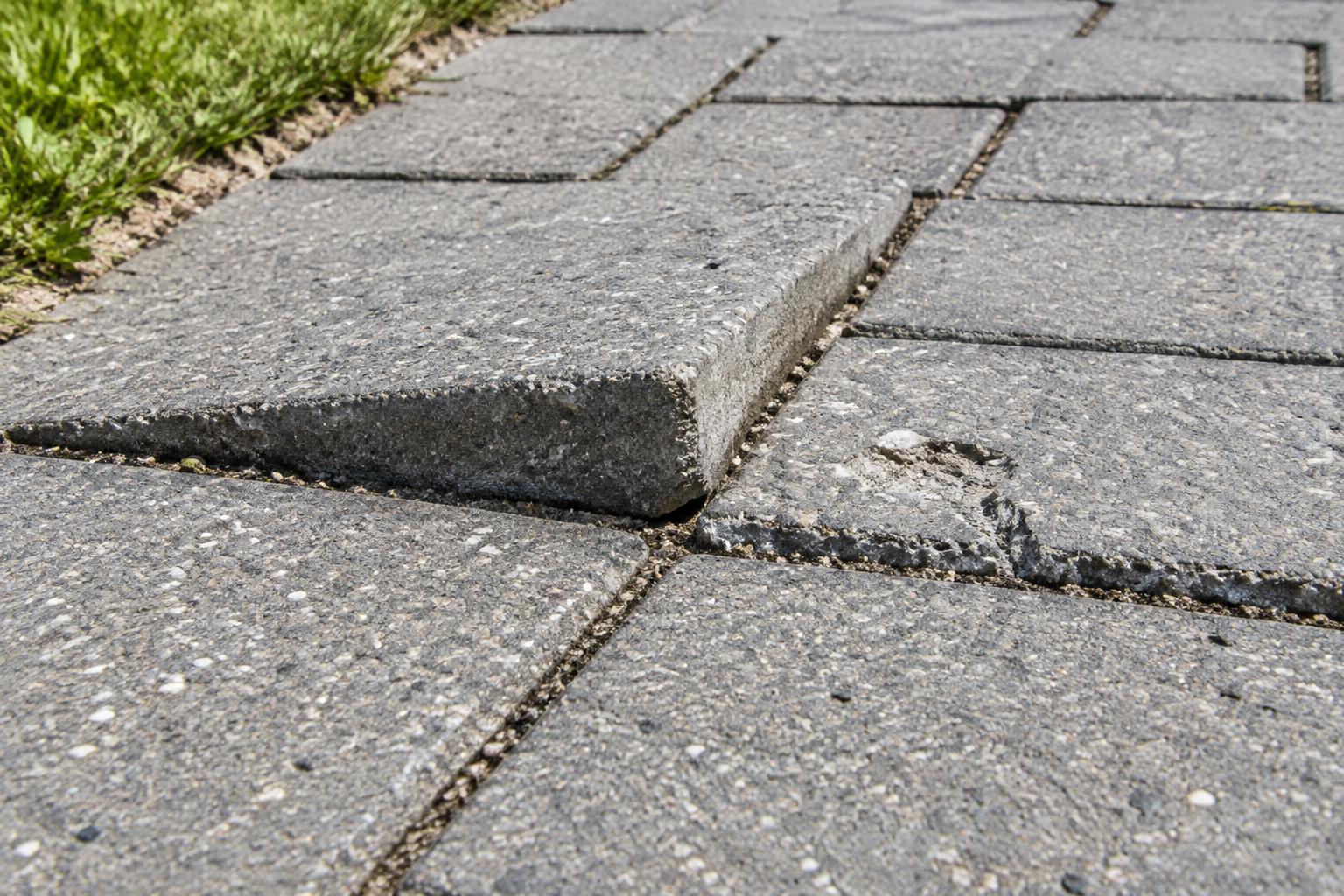
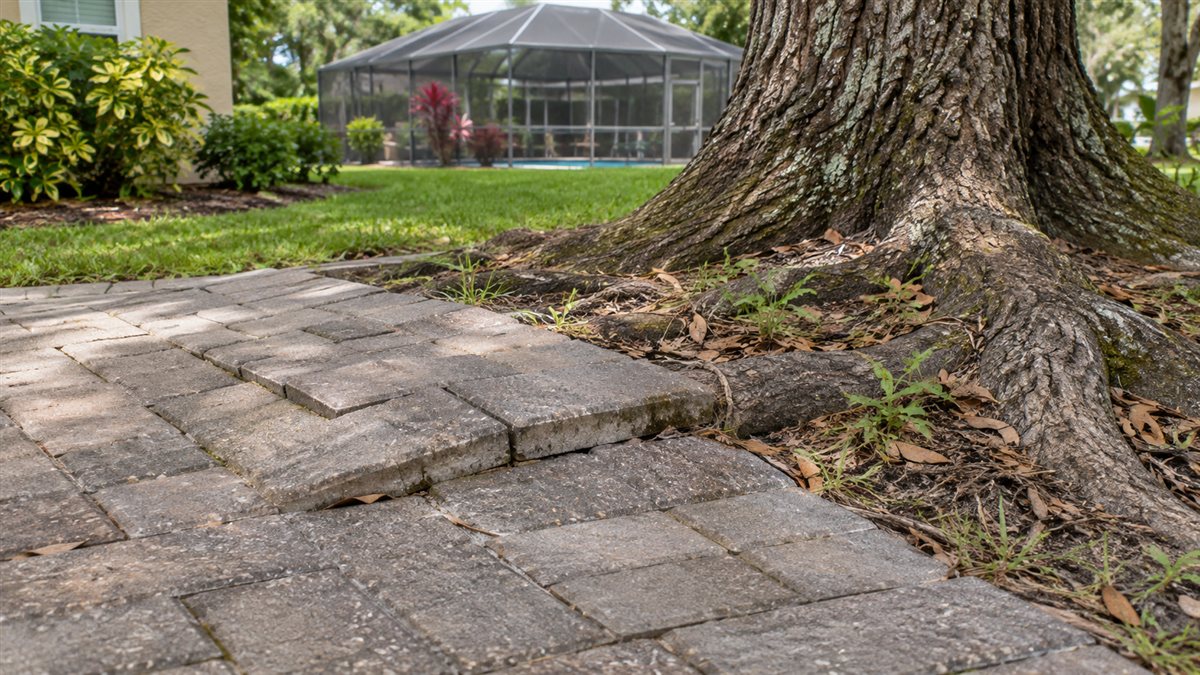
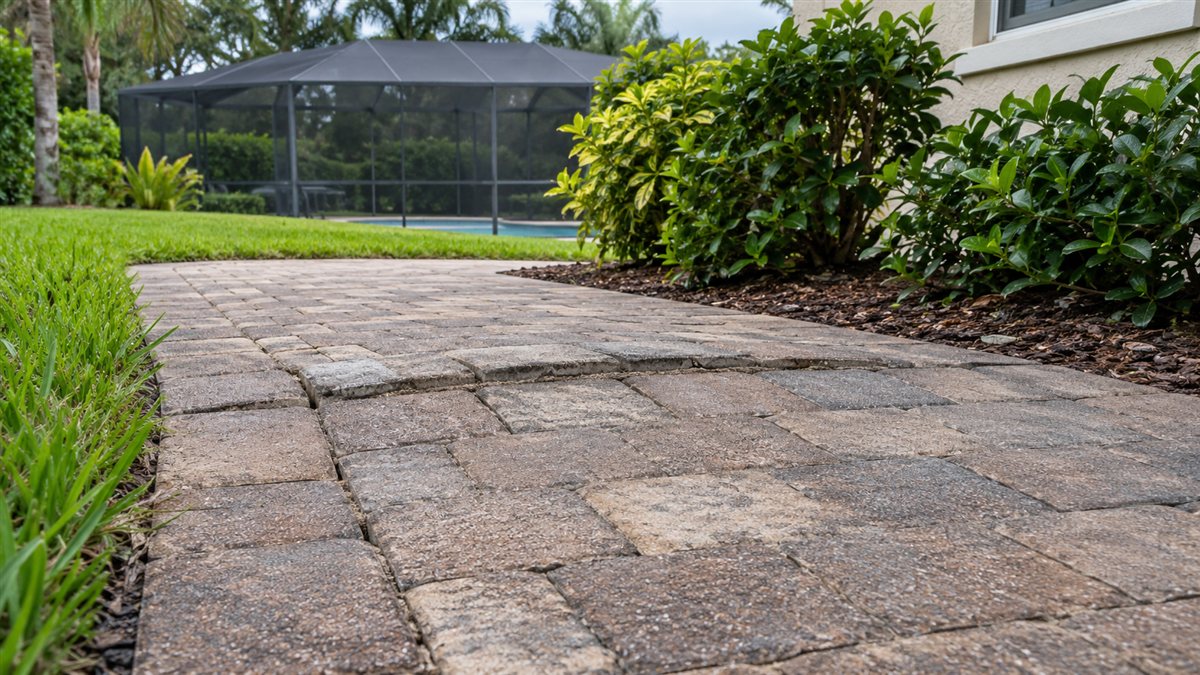
Paver heaving is upward movement in part of a paved surface, creating a raised area that needs evaluation of the pavement and surrounding conditions.
Generated educational illustration — not a documented project or a photograph of the assigned metadata location.
Upward movement versus downward settlement
CMHA maintenance guidance considers changes in pavement condition and their causes. Heaving describes a raised area, while settlement describes downward movement. Neither label identifies a particular soil process from appearance alone. See CMHA operation and maintenance of interlocking concrete pavement.
Describe the surrounding conditions
Note nearby trees, previous excavation, drainage changes or construction only when known. Record whether the rise is new or increasing. Do not assume a root is responsible without evidence, and do not cut roots or alter utilities as an improvised paving repair.
Look at transitions as well as the center
An uplifted patch can affect joints, edges and neighboring thresholds. Report door interference or an abrupt walking transition. The overall drainage route may also change even when the visible area seems small.
Repair scope is cause-dependent
Review the units, support and surrounding site before releveling the surface. Removing a raised unit and adding material elsewhere may not address recurring movement. The proposed repair should explain what condition it resolves and what further assessment may be needed.
Planning the next step
Identify whether the pavement carries pedestrians, vehicles or poolside traffic and provide photos of the full area, not just one joint. Mention previous repairs, known coatings and where runoff travels. Ask which observations support the proposed treatment and whether supporting layers need assessment. This guide concerns conventional concrete pavers unless a different system is specifically identified; natural stone, mortared and permeable assemblies require their own guidance.
Manufacturer instructions apply to the identified product or system. General guidance does not establish a project-specific structural rating, code approval or repair specification.
Paver Heaving: practical planning details
Mark the raised area on a simple plan and photograph its relationship to trees, edges, drains and nearby construction. Ask the repair scope to identify what will be investigated below the affected units. Raising and relaying the visible surface is different from identifying why movement occurred. Keep observations and proposed causes separate so the contractor can explain which findings justify the selected repair.
A question to bring to your estimate
What underlying condition will be checked before the units are reset?
These references provide background for the topic. Product instructions apply to the identified product; research and general guidance do not establish the capacity, permit status or legal outcome of an individual project.
Paver Heaving: detailed decisions, inspection and care
Establish what moved and what stayed fixed
A raised patch should be compared with nearby stable references rather than judged only from the highest-looking unit. Mark the extent of the rise, the direction of any tilted units and the relationship to borders, drains and thresholds. Ask whether the surrounding field has instead settled, making the unchanged area appear high. This comparison helps define what needs measuring during the inspection.
Record changes over time from the same viewpoint. Include practical effects such as a gate dragging, water changing direction or a wheel catching an edge. These are useful observations even when the hidden mechanism remains uncertain.
Treat nearby trees as part of the assessment
UF/IFAS guidance on wind-resistant urban trees warns that cutting structural roots can compromise tree stability. Where a raised pavement area overlaps a tree root zone, coordinate paving decisions with a qualified tree assessment rather than treating root removal as routine preparation.
UF/IFAS guidance on root health also explains why construction activity and compaction around roots deserve attention. Ask where equipment, excavated material and replacement aggregate will be placed before work begins. Protecting the tree and restoring the walking surface should be discussed together.
Compare the repair options by their consequences
Ask the contractor to identify what each option changes: individual units, the supporting layers, the walkway alignment or the surrounding landscape. If rerouting a walk is proposed, review access and drainage as well as the new appearance. If lifting and relaying is proposed, ask what finding supports that approach and what remains outside its scope. Avoid comparing prices for options that leave different causes or constraints unresolved.
Prepare a useful heaving assessment record
Show the full raised area and its transitions to unaffected paving.
Identify nearby trees, irrigation, utilities and previous excavation when known.
Record door or gate interference and changes in the route water follows.
Ask who is responsible for tree, utility or ground-condition review if needed.
Keep the agreed repair limits and follow-up observations with the completion photos.