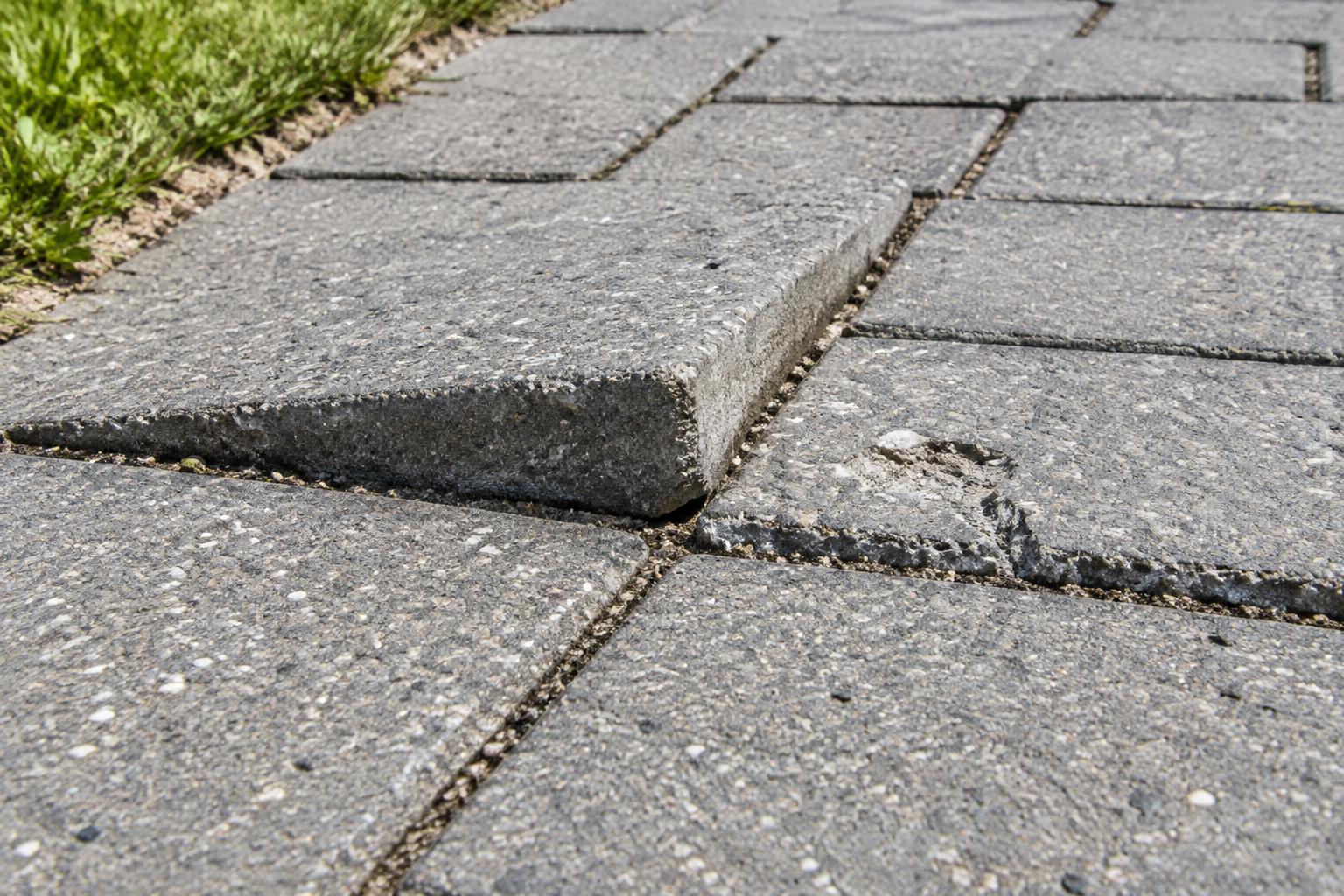
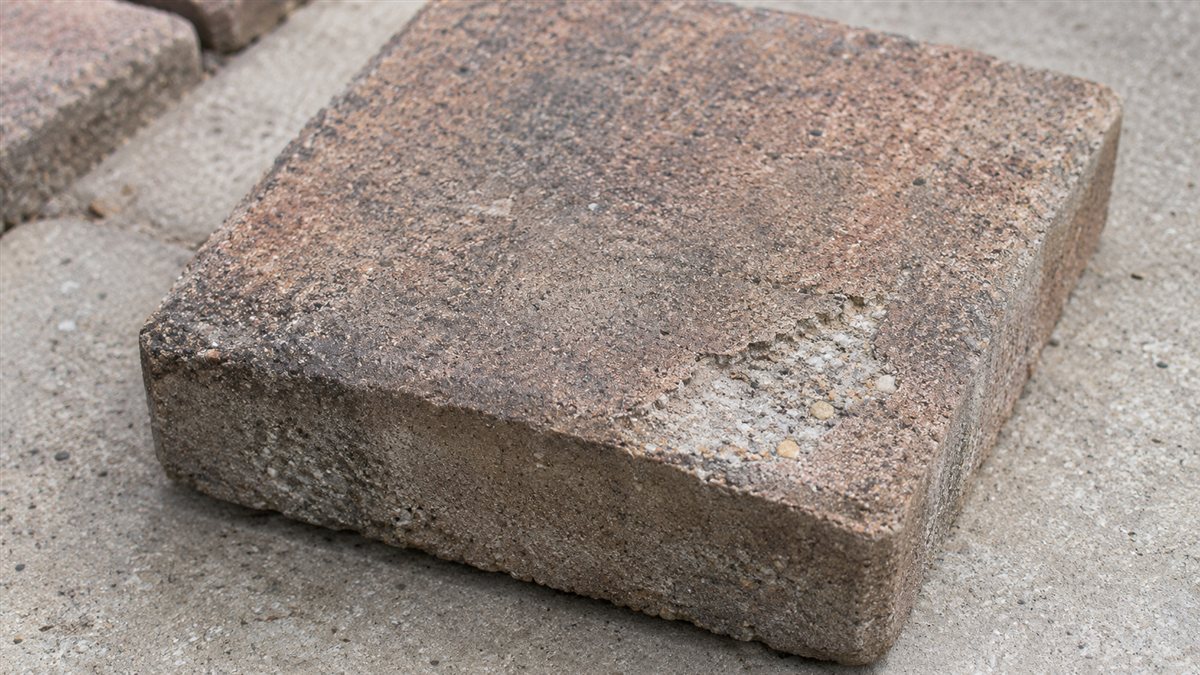
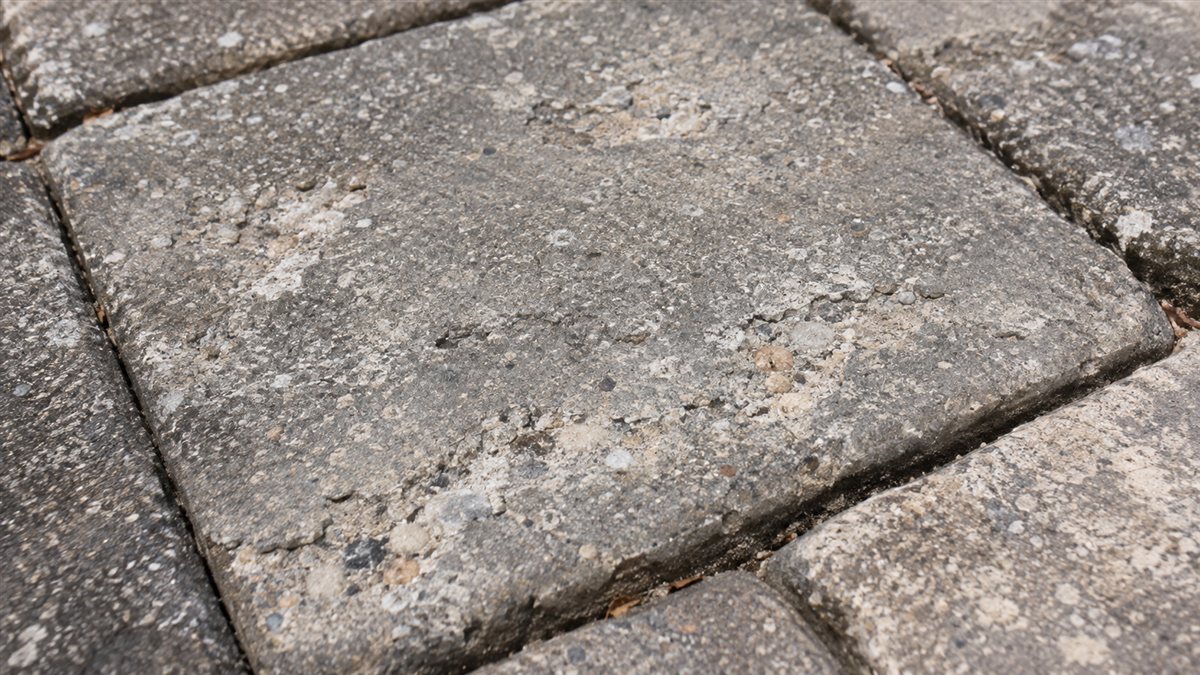
Paver spalling is localized flaking or loss of material from a paving-unit surface or edge, distinct from downward pavement settlement.
Generated educational illustration — not a documented project or a photograph of the assigned metadata location.
Describe material loss rather than a cause
CMHA maintenance guidance addresses assessment of pavement condition. Spalling describes loss from the unit itself. It differs from a white deposit, a stain or an entire unit moving downward, and appearance alone does not identify the mechanism. See CMHA operation and maintenance of interlocking concrete pavement.
Record exposure and treatment history
Note known cleaning products, coatings, impacts and when the change appeared. Do not assume salt, manufacturing defects or pressure washing caused it without evidence. Whole-area photographs and close views can support a product-specific assessment.
Cleaning cannot replace missing material
Removing dirt may clarify the surface but does not rebuild a chipped face. Sealer also does not restore lost unit thickness or certify durability. An unsuitable aggressive treatment can obscure the assessment rather than resolve the condition.
Repair versus replacement scope
Discuss whether individual affected units need replacement and whether neighboring material shows the same issue. Product matching and surrounding support matter. Where loss creates a sharp or uneven walking surface, report that observation and keep people away from the hazard.
Planning the next step
Identify whether the pavement carries pedestrians, vehicles or poolside traffic and provide photos of the full area, not just one joint. Mention previous repairs, known coatings and where runoff travels. Ask which observations support the proposed treatment and whether supporting layers need assessment. This guide concerns conventional concrete pavers unless a different system is specifically identified; natural stone, mortared and permeable assemblies require their own guidance.
Manufacturer instructions apply to the identified product or system. General guidance does not establish a project-specific structural rating, code approval or repair specification.
Paver Spalling: practical planning details
Photograph the affected face or edge with neighboring intact units visible. Note whether the condition appeared after cleaning, impact or other work without assuming that sequence proves cause. Ask the contractor whether replacement units can be matched and whether the adjoining pavement needs attention. Distinguish local surface material loss from a broader elevation problem so the proposed work addresses the condition actually observed.
A question to bring to your estimate
Is the repair addressing damaged units, pavement movement or both?
These references provide background for the topic. Product instructions apply to the identified product; research and general guidance do not establish the capacity, permit status or legal outcome of an individual project.
Paver Spalling: detailed decisions, inspection and care
Document the missing material before treating the surface
Photograph the affected face or edge beside an intact unit of the same type. Show whether the loss is a shallow patch, an irregular corner or a repeated condition across several units. Note roughness, loose fragments and whether the surface has changed since the previous inspection. Keep color change separate from actual loss of concrete.
List known events such as a dropped object, recent cleaning, coating work or construction traffic. Timing is useful evidence, but it does not establish which event caused the damage. Avoid applying another treatment before a product or condition assessment if that would obscure the original surface.
Separate product condition from pavement movement
CMHA’s pavement glossary distinguishes unit geometry and material condition from pavement movement. Replacement and support correction are separate repair decisions.
Ask the assessor to mark units that need replacement and areas that need further investigation. If damage repeats along a border or a contact line, include the neighboring construction in the review. A quote for a uniform surface treatment should not be assumed to include replacement of missing material.
Plan replacement matching and reuse carefully
Gather spare units, purchase records and manufacturer information if available. Compare the proposed replacements with the existing surface after both are dry. Ask about differences in thickness, edge profile, texture and weathering as well as color. If an exact match cannot be obtained, review the placement of replacements before agreeing to a highly visible patch.
The reuse approach described in CMHA’s reinstatement guidance is useful for sound units, but damaged units require their own decision. Keep the replacement count and any allowance for discoveries during lifting explicit.
Questions before approving the repair
Is the concern limited to individual units or repeated across a product area?
Will the supporting and adjoining conditions be checked when units are lifted?
Which replacement product is included, and what matching limitations are known?
Does any proposed cleaner or sealer have a separate purpose?
How will sharp edges or loose pieces be managed until the work is complete?
Keep evidence for later review
Retain photographs, product records and an agreed sample of an affected unit when appropriate. Record the repaired locations. That information supports a later manufacturer or contractor conversation without turning an initial visual observation into an unsupported conclusion about all the paving on the property.