Paver Bedding Sand: Definition and Homeowner Guide
The prepared sand layer immediately beneath sand-set interlocking concrete pavers, distinct from the base and joint sand.
Generated educational illustration — not a documented project or a photograph of the assigned metadata location.
Definition and homeowner use
The prepared sand layer immediately beneath sand-set interlocking concrete pavers, distinct from the base and joint sand. This definition helps separate a material or surface condition from the broader installation, repair or maintenance service that may be needed.
Bedding, base and joints are different
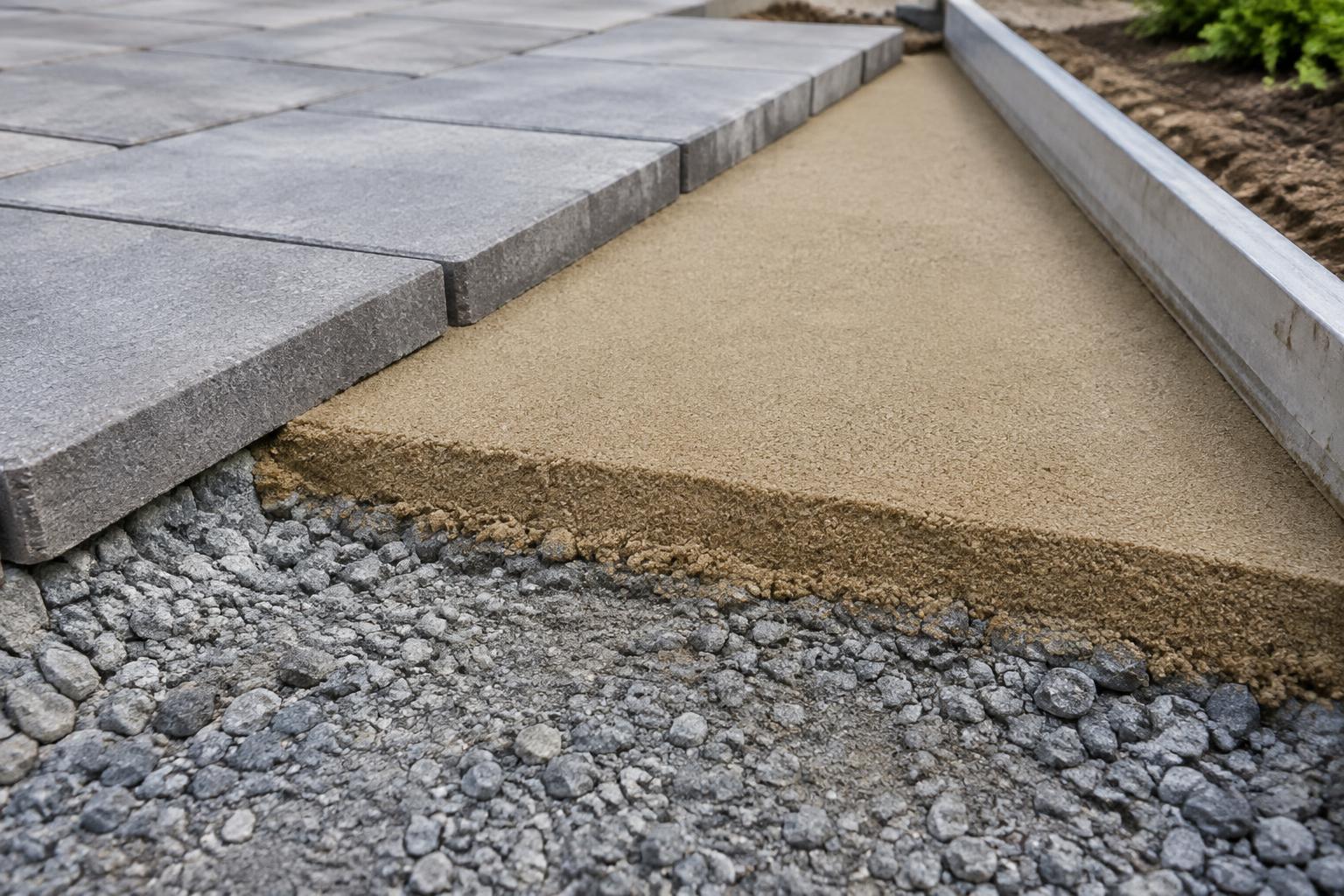
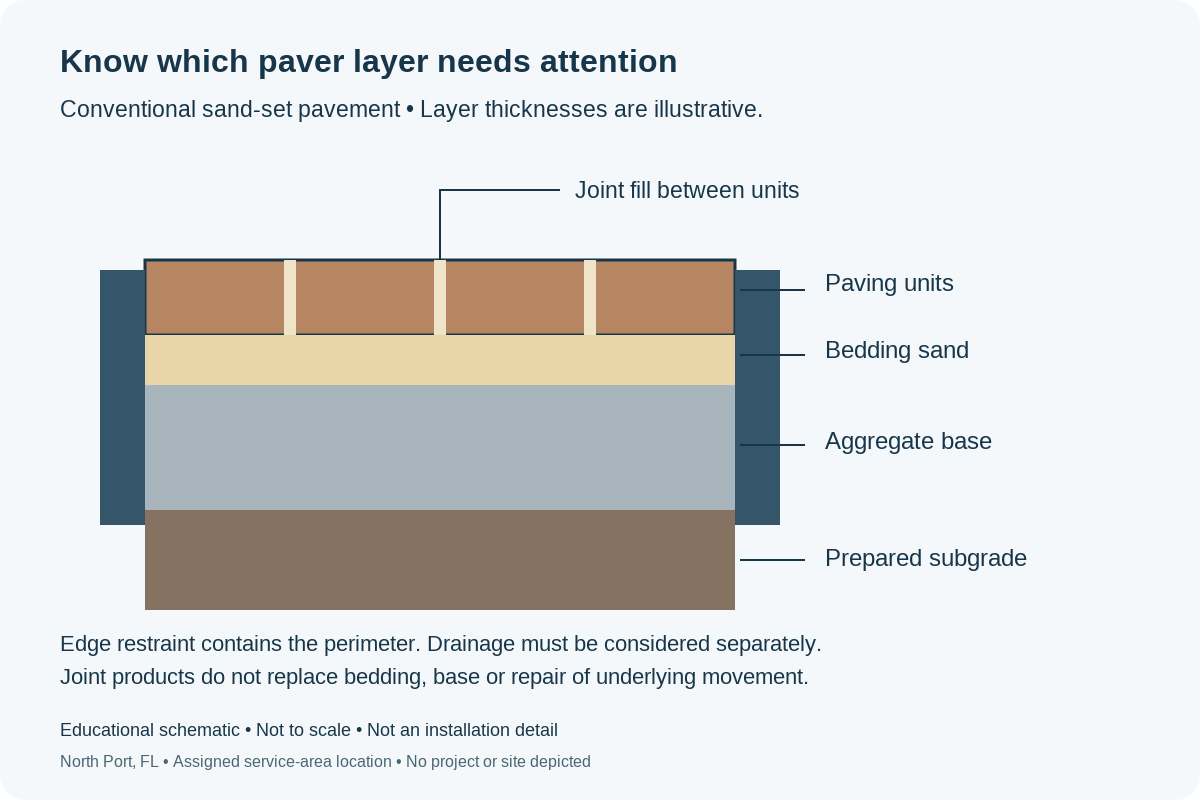
Bedding sand supports the pavers immediately below their faces. The compacted base lies beneath it, while joint sand occupies the gaps between pavers. These materials serve different roles and are not interchangeable.
Material selection affects performance
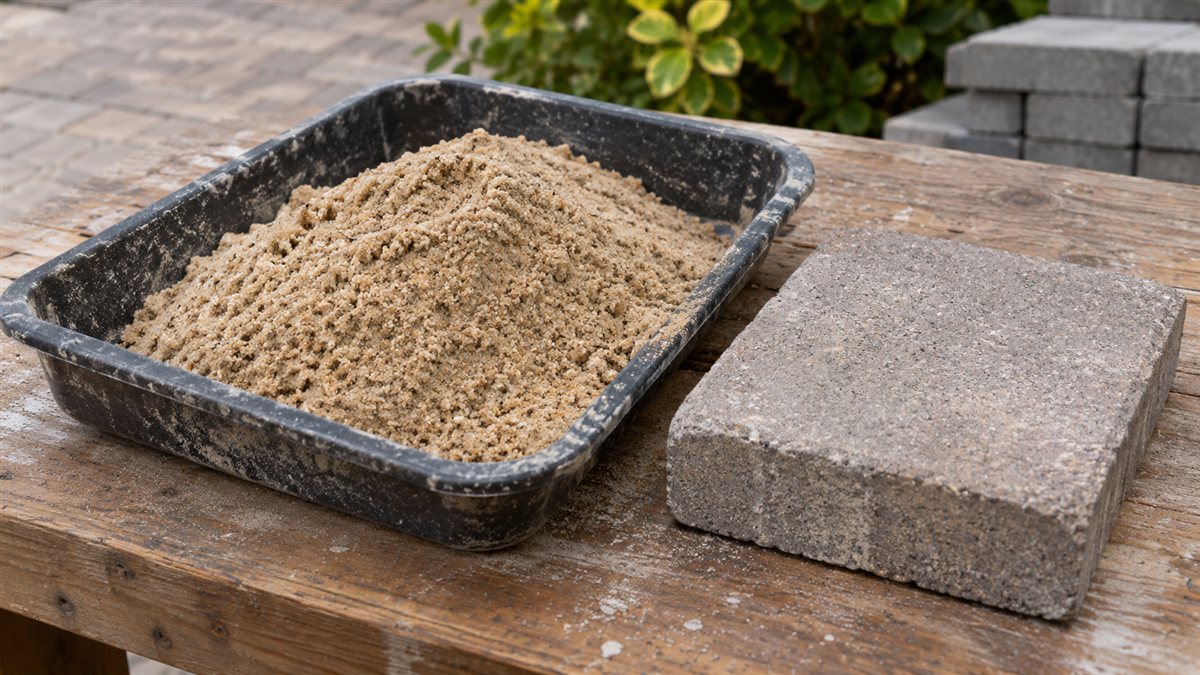
CMHA explains that bedding sand contributes to installation, interlock and drainage in sand-set concrete pavement. Its guidance is application-specific, particularly for vehicular use; not every bag labeled sand is suitable bedding material.
Installation limits
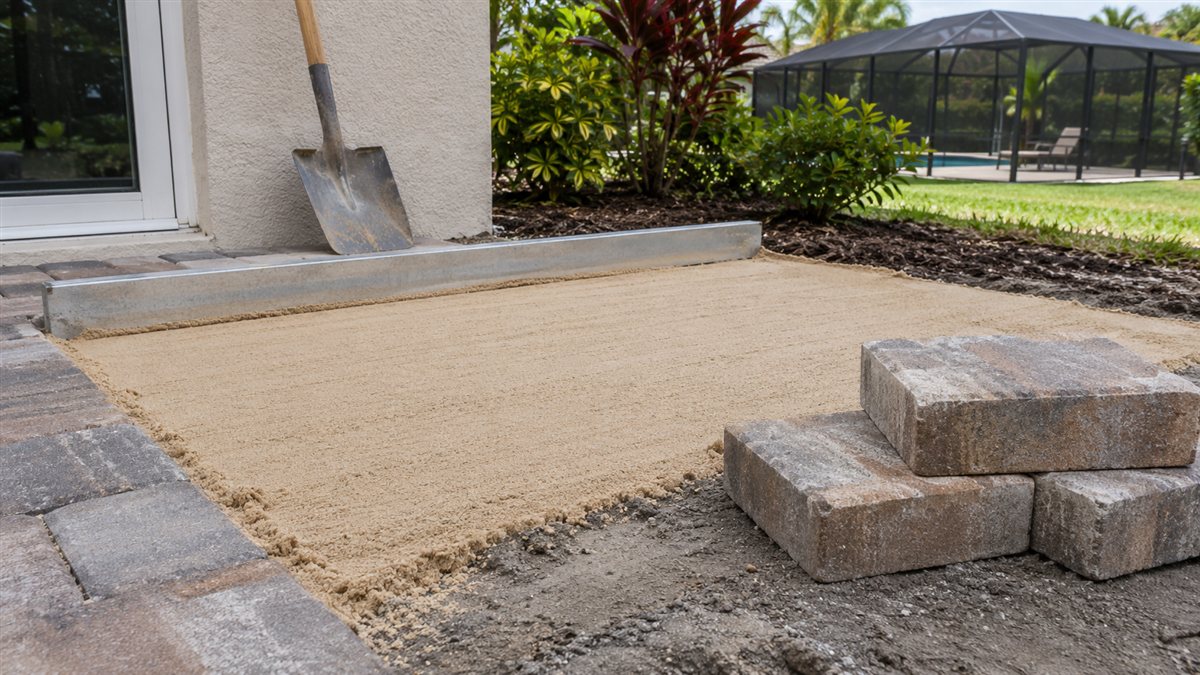
Bedding should follow the project’s pavement design and material guidance. It is not a substitute for an adequately prepared base and should not be used as an arbitrary thick fill to hide base irregularities.
Diagnosing a low area
Surface settlement alone does not prove a bedding-sand defect. The base, water path, edge restraint and prior construction can all require evaluation before a repair is specified.
Requesting an assessment
Provide photos of the full area and close views of the observed condition. Mention drainage patterns, previous repairs and known cleaning or sealing products. Ask for the proposed treatment and its limits in writing; a photograph alone does not establish the underlying cause.
Manufacturer instructions apply to the identified product or system. General guidance does not establish a project-specific structural rating, code approval or repair specification.
Paver Bedding Sand: practical planning details
CMHA distinguishes bedding-sand selection from the supporting base design. Ask the installer to name the bedding material and explain how the base will be prepared before the pavers are laid. Keep delivery records where practical. If a proposal addresses a low area, ask whether the repair includes the cause beneath the units rather than simply adding loose material without reviewing the surrounding pavement and drainage.
Conventional sand-set pavement components have different jobs. Educational diagram, not a construction specification or permeable-pavement detail. Assigned location metadata: North Port, FL.
A question to bring to your estimate
Is the proposed material for bedding, joints or the supporting base?
These references provide background for the topic. Product instructions apply to the identified product; research and general guidance do not establish the capacity, permit status or legal outcome of an individual project.
Paver Bedding Sand: detailed decisions, inspection and care
Why the bedding layer needs a material specification
CMHA’s bedding-sand bulletin discusses grading, particle durability and drainage, particularly under demanding vehicular loading. Its heavy-traffic scope should not be turned into a single prescription for every patio. The useful lesson for a residential quote is to identify the actual bedding material and the application for which it is being selected.
Ask whether the proposal identifies a material specification, a supplier product or only a generic allowance for sand. If a substitute is offered, request the reason and supporting information before it is delivered. Similar color is not a useful basis for deciding whether two materials have the same properties.
Distinguish an even bedding layer from grade correction
The construction sequence in CMHA’s installation guidance prepares and grades the supporting base before placing the bedding. The bedding operation is not an invitation to hide irregular base elevations with variable piles of sand.
For a repair near a door or pool-deck drain, ask the contractor to show the intended finished elevations and the layer that will be adjusted to achieve them. “Raise the pavers” should be translated into an actual scope: which units are lifted, which material is removed or replaced, and how the transition to untouched paving is finished.
Separate three material decisions
Material location
What to confirm
Below the bedding
Base material, preparation and finished grade
Immediately below the units
Bedding specification and consistent placement
Between the units
Joint material and filling requirements
Useful information when a low patch returns
Write down the repair date, the approximate area relaid and when the depression became noticeable again. Note whether the change followed heavy rain, a utility repair or a change in vehicle use, without treating the timing as proof of cause. Include photographs showing nearby fixed levels such as the garage floor, curb or drain frame. Ask the next assessor to explain whether the investigation will stop at the bedding or continue into the base and soil if the findings warrant it.
Before accepting the completed repair
Review the transition from the repaired patch to the existing paving.
Confirm that the intended water route and drain access remain open.
Keep the bedding and joint-product identification with the invoice.
Agree on how to report renewed movement, rather than relying only on a photograph taken on completion day.