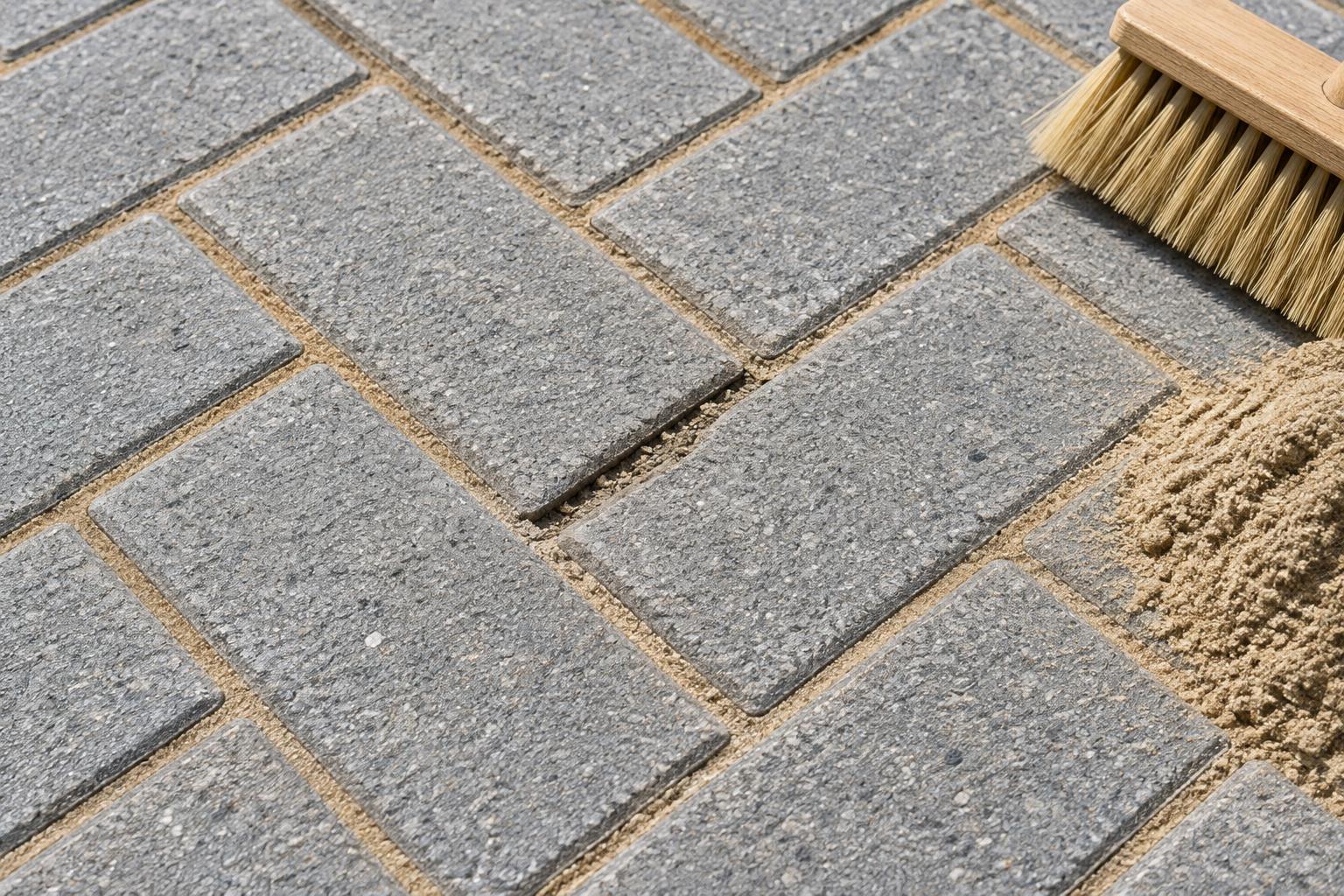
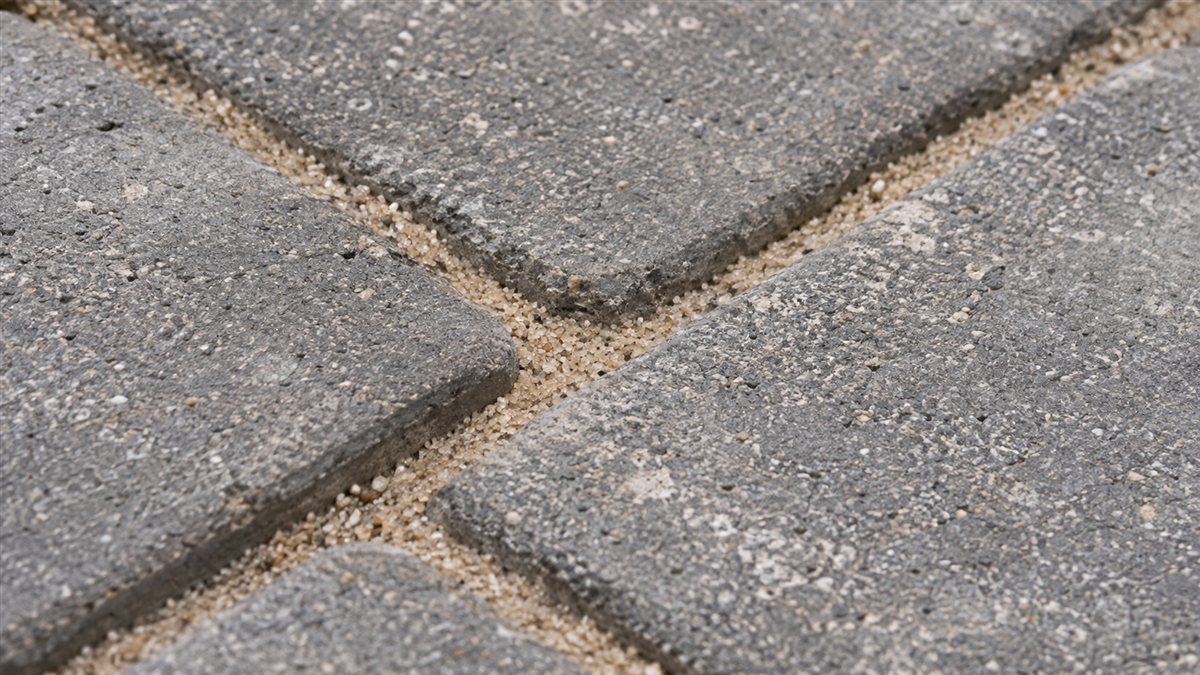
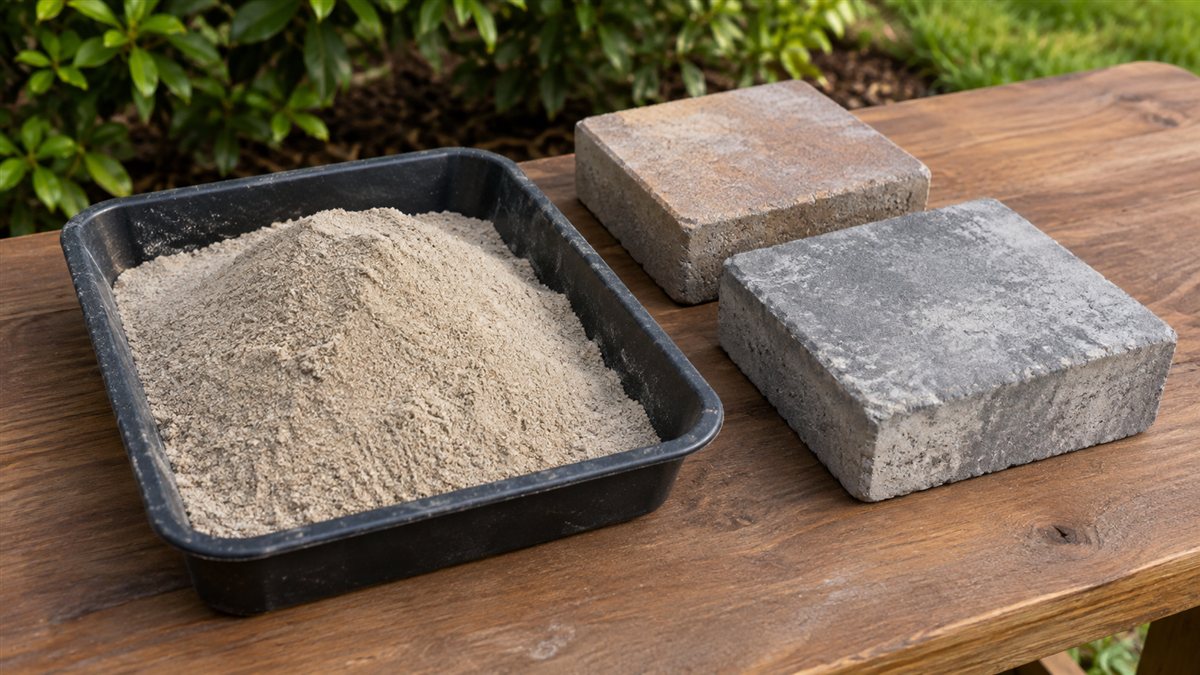
Paver joint sand is material placed between compatible conventional sand-set concrete paving units, distinct from bedding below them.
Generated educational illustration — not a documented project or a photograph of the assigned metadata location.
Joint fill and bedding are different
CMHA construction guidance distinguishes pavement layers and joint filling. Joint material occupies gaps between units; bedding lies beneath them. Sand used in one role is not automatically suitable for the other, and different pavement systems have different joint requirements. See CMHA construction of interlocking concrete pavements.
Plain and stabilized materials
Some joint materials are ordinary specified sand, while others contain binders or use a compatible stabilization treatment. Identify the intended system before adding a product. Polymeric sand is one manufactured option, not a generic name for every joint fill.
Empty joints need context
Lost fill may be visible without proving why it disappeared. Water flow, cleaning, movement and maintenance history can matter. Filling the gap does not repair an unsupported edge or a low area caused by conditions below the surface.
Application follows the actual product
Use the pavement and material instructions for filling, compaction or activation as applicable. Do not infer a universal joint width from one example. Permeable pavements use their specified joint aggregate and should not be indiscriminately filled with ordinary sand.
Planning the next step
Identify whether the pavement carries pedestrians, vehicles or poolside traffic and provide photos of the full area, not just one joint. Mention previous repairs, known coatings and where runoff travels. Ask which observations support the proposed treatment and whether supporting layers need assessment. This guide concerns conventional concrete pavers unless a different system is specifically identified; natural stone, mortared and permeable assemblies require their own guidance.
Manufacturer instructions apply to the identified product or system. General guidance does not establish a project-specific structural rating, code approval or repair specification.
Paver Joint Sand: practical planning details
Ask whether the proposed joint fill is conventional sand, a dry stabilized product or another specified system. Request the product name and compatibility with the actual joint and paving unit. Keep joint fill distinct from bedding material under the units. If the work follows cleaning, discuss how removed fill will be restored and how the finished area will be checked rather than treating sand as an unspecified finishing allowance.
A question to bring to your estimate
Which joint material is included and how will completion be verified?
These references provide background for the topic. Product instructions apply to the identified product; research and general guidance do not establish the capacity, permit status or legal outcome of an individual project.
Paver Joint Sand: detailed decisions, inspection and care
Match the fill to the joint that actually exists
CMHA’s sand-selection bulletin discusses joint material together with joint width, dry placement and complete filling. A grain size that cannot enter the actual gap will not become suitable merely because the bag says paver sand. Check the unit geometry and selected material instructions together.
For an older driveway, identify whether the existing fill is loose sand, a stabilized material or something else before purchasing more. Ask whether the proposed work is routine replenishment or removal and replacement of an incompatible or deteriorated joint system. Those operations should not share an indistinct description such as “resand as needed.”
Keep full-depth joint work separate from a surface dusting
Ask the installer how the specified material will reach and occupy the intended joint depth. A thin layer visible at the top is not a record of the work below it. For a product containing binders, obtain its required joint dimensions, application conditions and activation instructions. Do not transfer a method from another product solely because both are sold in similar bags.
In conventional pavement maintenance, CMHA’s maintenance guide cautions against using polymeric sand simply as a topping over existing joints. If changing systems, ask for a product-compliant preparation scope rather than a cosmetic skim.
Make the maintenance allowance specific
Item
Detail to request
Material
Manufacturer or material specification, color and intended use
Preparation
What will be removed, retained and cleaned
Placement
How filling and any seating or activation will be completed
Protection
Weather and traffic restrictions for the selected product
Completion
How remaining surface residue and incomplete joints will be checked
A different rule for permeable paving
Before treating a driveway described as permeable, ask for its original assembly and joint-aggregate specification. Do not select a familiar sand product solely because it is convenient for the maintenance crew. If documentation is missing, identify the system before filling it. Keep that distinction in the service request so a conventional resanding allowance is not applied automatically to a pavement intended to pass water through open joints.