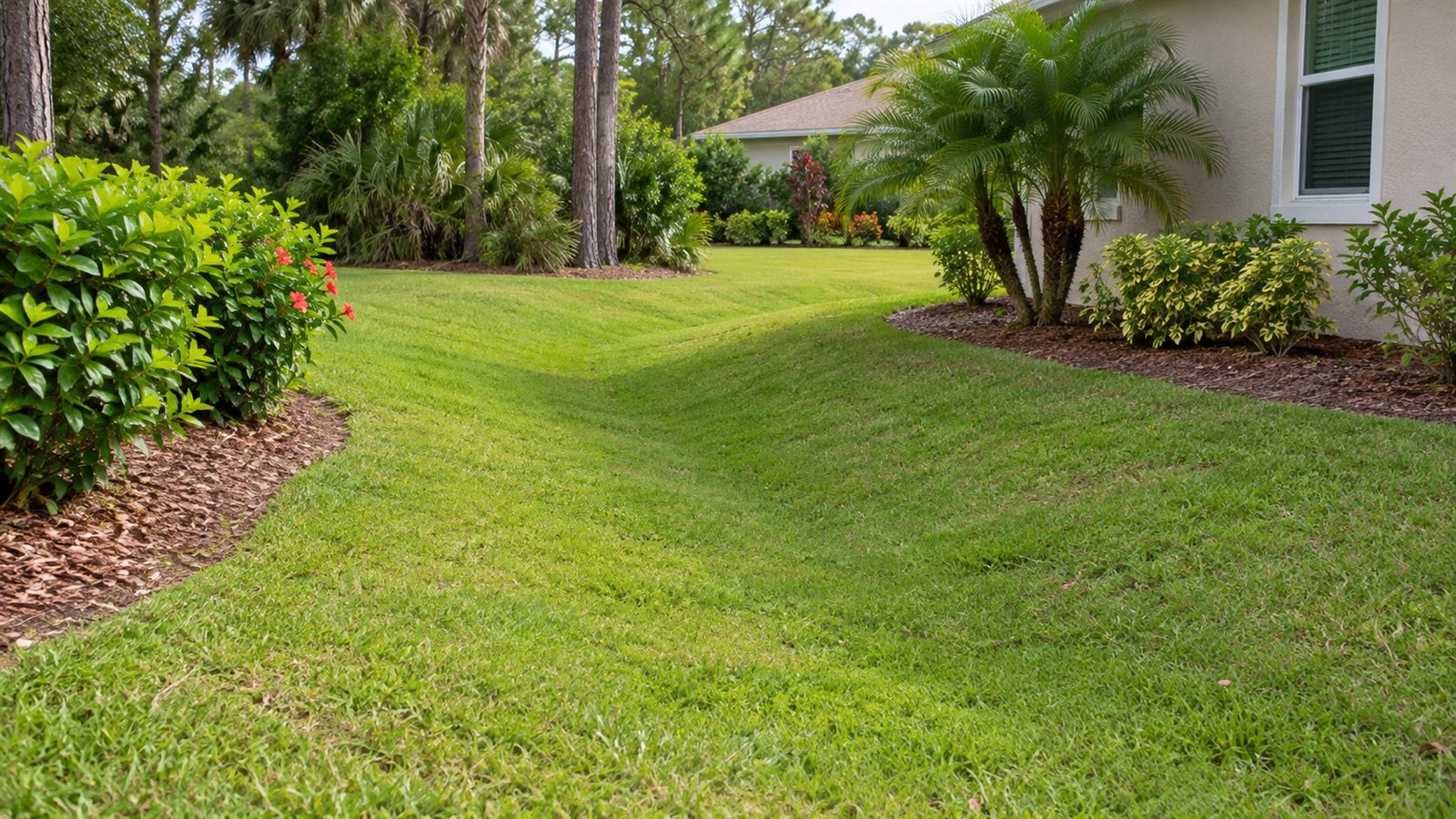
A swale has a route and destination
Its grading, surface and receiving point matter together. A shallow grass depression can be easy to overlook when planning pavers, landscaping or an enclosure. Ask whether a proposed change crosses or obstructs an existing drainage route. The appearance of a low spot does not by itself prove it is a designed swale or identify its intended capacity.
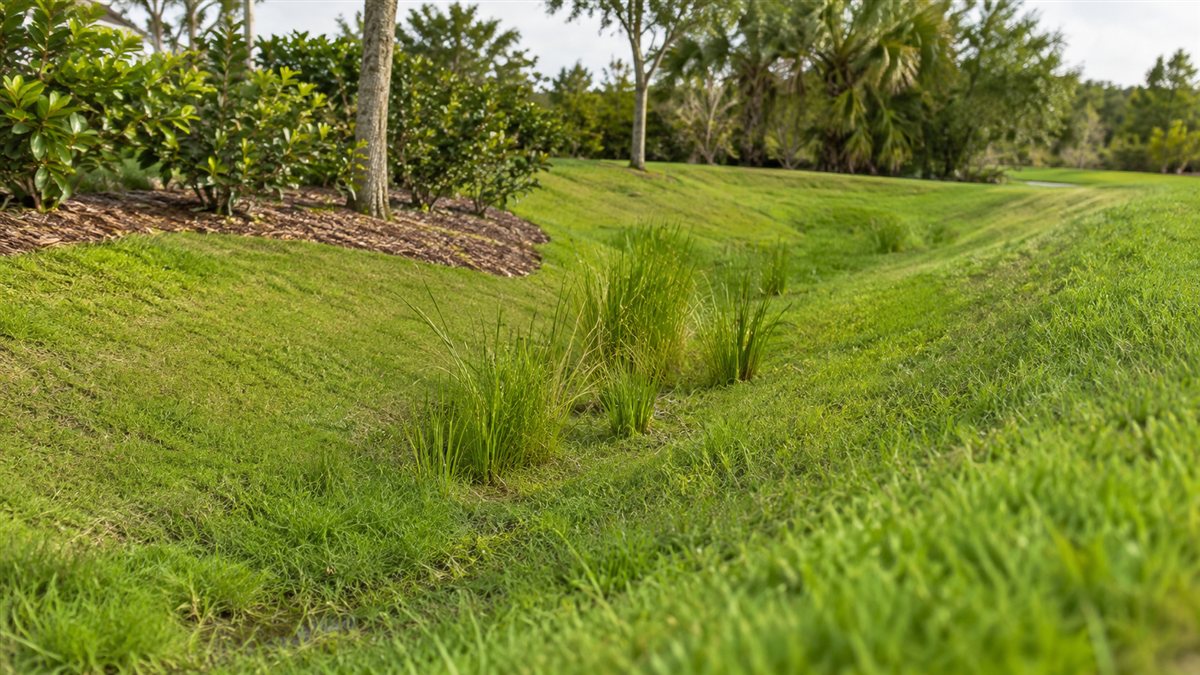
Avoid solving one problem by moving it
Roof-water redirection toward a swale should be considered with the site conditions and applicable requirements. Do not assume every vegetated area is a suitable discharge point. A contractor should identify the intended water path and any necessary site review. Filling a depression for a smoother lawn can alter drainage beyond the visible area.
A practical homeowner example
A new walkway would cross a broad shallow depression. The homeowner asks the project team to determine its drainage role before grading the path through it.
This is an illustrative planning scenario, not a report of a particular West Coast Screening project.
Questions to bring to an estimate
- Show where the water enters, travels and ultimately discharges.
- Record the symptom separately from the proposed cause and repair.
- Ask how the completed work will be checked under suitable conditions.
Frequently asked question
Is a swale the same as a trench drain?
No. A swale is a shaped surface feature. A trench drain is a constructed collection assembly; their forms and functions differ.
Related glossary terms
For the broader vocabulary, return to the pool cage and screen-enclosure glossary.
Authority sources and further reading
Use these sources within their scope. Manufacturer information applies to the identified product; research and general guidance do not establish a rating or an approved repair for an individual project.