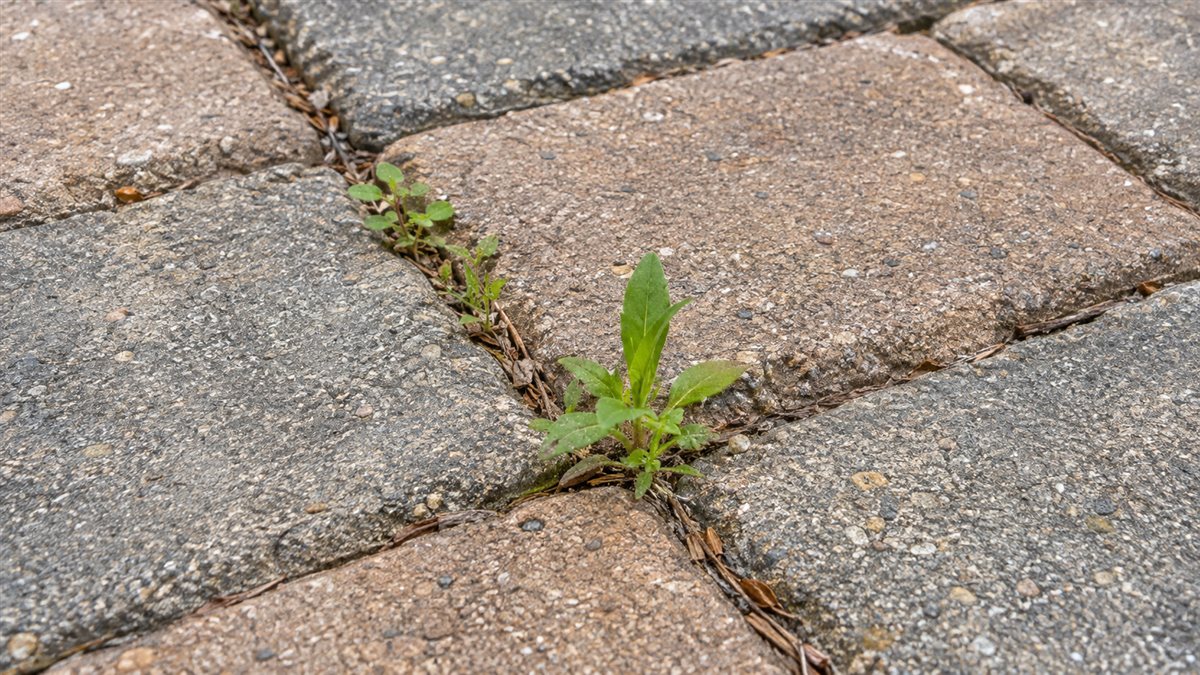
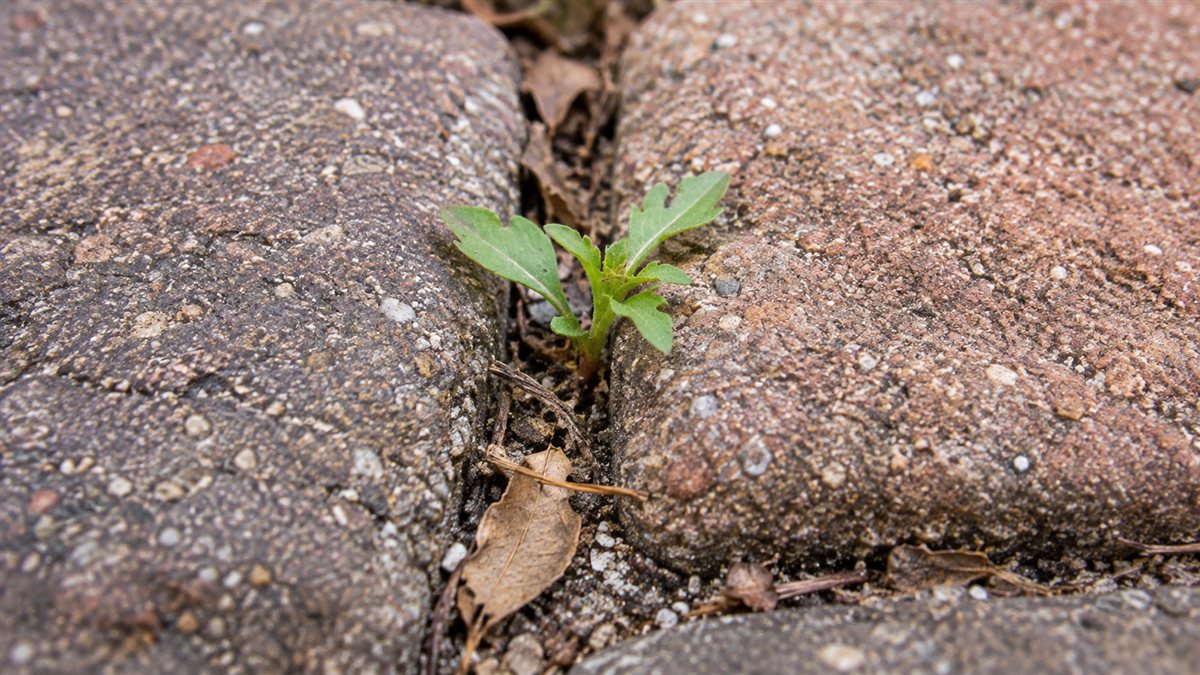
Paver joint weeds are plants growing in or around spaces between paving units; their presence alone does not diagnose the condition of the pavement base.
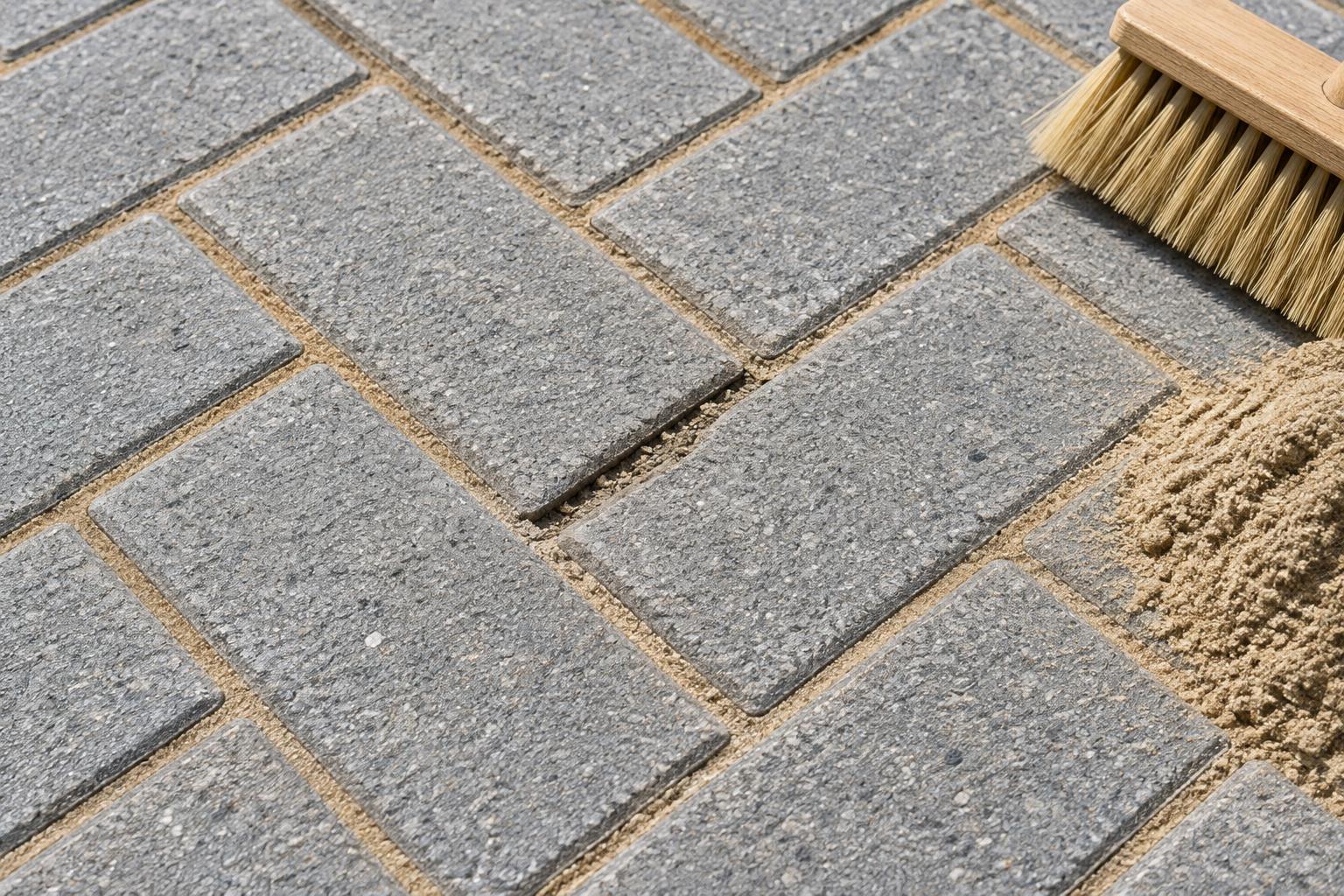
Generated educational illustration — not a documented project or a photograph of the assigned metadata location.
Plants and pavement maintenance
CMHA maintenance guidance recommends removing debris and maintaining joint fill. Organic material can collect between units. Visible weeds do not prove they grew from below every pavement layer or that the driveway was installed incorrectly. See CMHA operation and maintenance of interlocking concrete pavement.
Look at debris and joint condition
Note whether growth occurs along landscape edges, in low joints or throughout the field. Cleaning surface debris and checking fill may form part of maintenance. Record the pattern before assuming a complete rebuild or stronger chemical treatment is needed.
Treatments need appropriate precautions
Plant removal and any product use should respect labels, nearby landscaping, water paths and the paving finish. This guide does not prescribe herbicide products or doses. Avoid introducing chemicals into a swimming pool or unapproved drainage destination.
Joint products are not universal guarantees
Polymeric materials and stabilization products have installation and maintenance requirements. They do not promise permanent prevention of all plant growth or repair moving paving units. Identify the existing material before choosing a compatible maintenance treatment.
Planning the next step
Identify whether the pavement carries pedestrians, vehicles or poolside traffic and provide photos of the full area, not just one joint. Mention previous repairs, known coatings and where runoff travels. Ask which observations support the proposed treatment and whether supporting layers need assessment. This guide concerns conventional concrete pavers unless a different system is specifically identified; natural stone, mortared and permeable assemblies require their own guidance.
Manufacturer instructions apply to the identified product or system. General guidance does not establish a project-specific structural rating, code approval or repair specification.
Paver Joint Weeds: practical planning details
For recurring joint vegetation, record where it appears and how the surface has been maintained. Ask the contractor to distinguish vegetation management from joint-fill restoration and any separate pavement repair. A clean-looking surface does not show the condition of the base, while visible plants alone do not establish a failed foundation. Discuss product compatibility before applying treatments around pools, landscaping or previously sealed units.
A question to bring to your estimate
Which parts of the proposal address plants, joint condition and pavement movement?
These references provide background for the topic. Product instructions apply to the identified product; research and general guidance do not establish the capacity, permit status or legal outcome of an individual project.
Paver Joint Weeds: detailed decisions, inspection and care
Separate plant identification from pavement repair
Begin by mapping where growth is concentrated: landscape edges, shaded areas, joints with accumulated debris or isolated openings. Note whether the same plants return after removal. A vegetation problem and a moving pavement can coexist, but they call for different parts of the service scope. Ask the provider to identify which work addresses plants and which work addresses joint or paving condition.
UF/IFAS guidance on nonchemical weed control distinguishes short-lived top growth control from methods that address persistent plants. Removing visible leaves alone should not be described as a permanent cure for every weed.
Choose a method with the surrounding site in mind
For a small area, discuss careful manual removal and collection of debris before deciding that broad chemical treatment is necessary. Ask how removal will avoid unnecessary disturbance of the joint material and how any resulting gaps will be assessed. Keep the swimming pool, desirable plants, pets and water route in the planning discussion.
If a pesticide is used, EPA’s label guidance explains where to find permitted uses, precautions, storage and first-aid information. Use the actual product label rather than a homemade mixture or an assumed dose from a different product.
Keep a realistic maintenance objective
Specify a manageable result: remove the identified vegetation, clear accumulated debris and review the joint condition. Ask how the owner should monitor regrowth and when follow-up is appropriate. Avoid treating “weed resistant” as a promise that no seed can ever reach the pavement. For permeable paving, preserve the intended joint aggregate and infiltration function when selecting the cleaning method.
Questions for recurring growth
Has the plant been identified well enough to choose the control method?
Is surrounding soil or mulch repeatedly reaching the joints?
Does irrigation regularly wet the affected strip?
Will the service remove plant residue rather than leave it in place?
Is joint restoration included, and does it match the existing pavement?
What observation would justify a paving repair instead of vegetation maintenance alone?
Record the result without overstating it
Save the treated-area sketch, product information where applicable and the service date. Take a follow-up photograph from the same viewpoint when growth recurs. That history makes a later conversation more useful than a general statement that the driveway always has weeds, and helps separate a persistent localized issue from routine seasonal maintenance.